Book Illustration: 25 Beautiful Examples
One of the most defining factors that can make any tale extremely great and memorable is the captivating illustration. Whether it is a whimsical forest or a character-expression animal, illustration can define them extraordinarily. Various examples demonstrate various visual strategies, such as book illustration styles for picture books, fantasy stories, educational projects, and graphic narratives.
Illustrations are used to help readers with understanding characters, imagine settings, and to relate to a story. They are also used to create atmosphere, to direct attention, and to make pages more welcoming. When creating your own picture book or looking for some reference, it is helpful to see the various ways to create a visual treatment and select a direction that will work for your audience.
What Role Do Illustrations Play in a Story?
A good visual has a purpose other than merely filling a page. It provides information that words do not convey.
A hunched-up shoulder may be a sign of nervousness even though it may not be written. A colour palette gives the impression of warmth and cosiness within the house, and dramatic shadows add a sense of danger.
Other Examples!
- Understand unknown words and concepts for younger readers.
- Distinguish and assign personalities to characters.
- Set the atmosphere, setting, and time of a narrative.
- Divide text and ease page navigation.
- Invite readers to observe details and ask questions.
The best book illustration artwork not only explains but also helps the story. Use some visual mystery and allow readers to think.
Some Helpful and Remarkable Illustration Examples
What Are the Best Character-Focused Illustration Styles for Stories?
When reading needs to be based on recognising personalities, relationships, and feelings, character-led artwork is useful. There are four ways to make memorable figures.
1 Expressive Animal Characters
Design theme – Gentle, playful, and with personality.
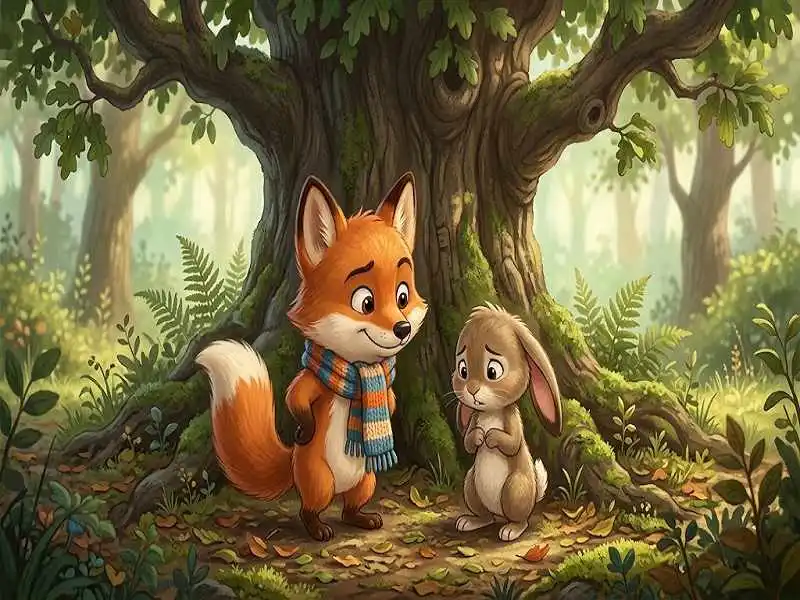
Visualise a small fox in a knitted scarf, standing next to a frightened rabbit under a giant tree. The fox has its eyes open and its ears up, indicating curiosity, and the rabbit has its ears down and eyes shut, showing uncertainty.
Engage in expressive eyes and rounded shapes, using some body language. The background is simple, a forest, focusing the viewer’s attention on the characters.
Reference Idea
Here you can imagine a friendship situation where two animals are reacting to the same unexpected event in different ways.
2 Whimsical Children in Everyday Settings
Design Idea – The theme is to be based on familiar childhood experiences with imaginative details.
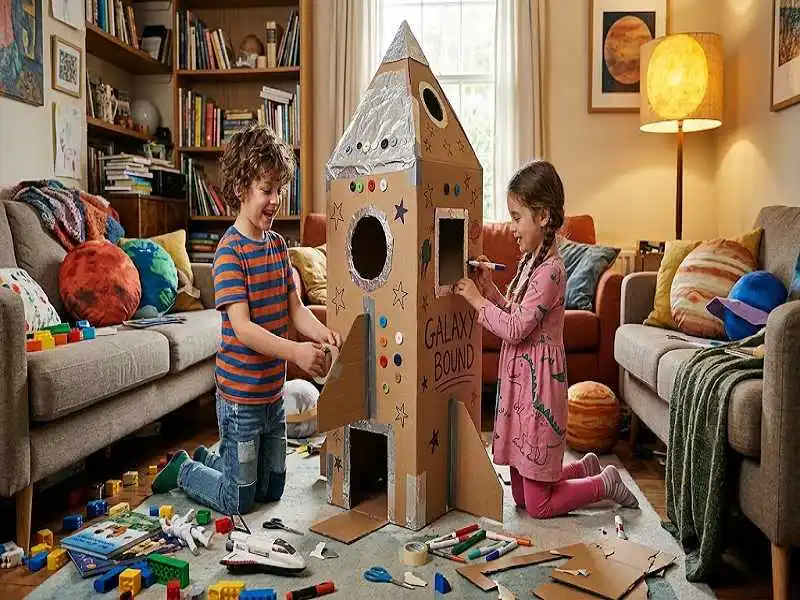
There is a scenario where two kids are working on a cardboard rocket in a living room. Cushions are transformed into planets, a lamp into a distant sun, and all the toys become a busy space station.
Do not mix up kids’ clothes and faces. Add common everyday items to help make the fantasy realistic.
Inspiration.
Make an ordinary chore, like straightening a bedroom, a fantasy.
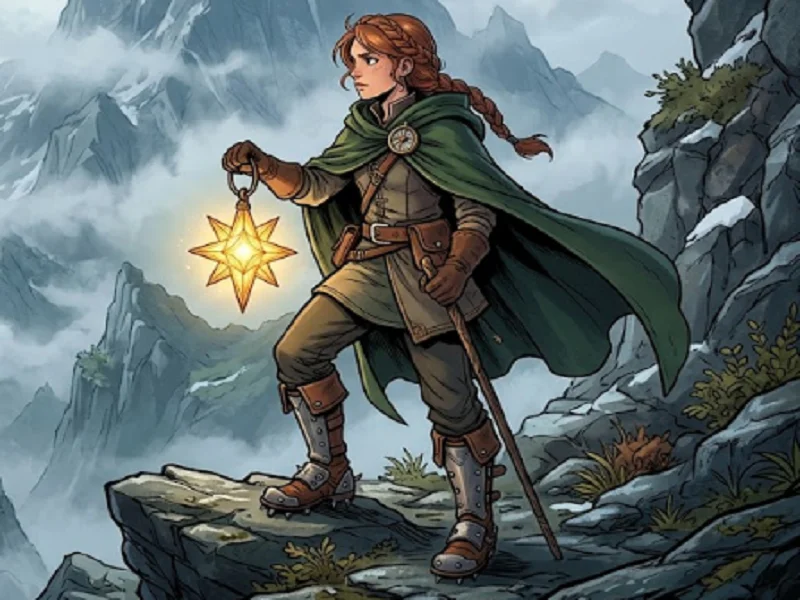
3 Stylised Fantasy Heroes
Design theme – Adventure, courage, and visual symbolism.
During an exploration journey through a foggy mountain pass, a young explorer may be accompanied by a star-shaped lantern. Personality can be set by a flowing cape, some strange boots, and a unique backpack. Strong silhouette with one identifiable accentuation. The background setting gives an idea of the scale of the journey.
Reference
Try to create a character whose outfit is appropriate to their role, for example, a mapmaker, guardian, or travelling healer.
4 Emotionally Expressive Portraits
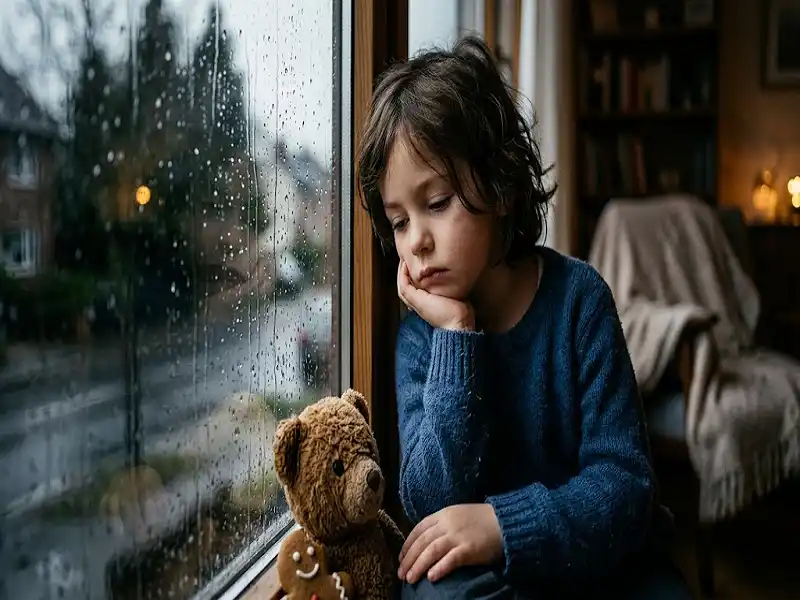
Design theme – Emotions expressed in close-ups.
A child with eyes down, relaxed shoulders, and a quiet expression may experience sadness while sitting by a window with rain on the glass. There could also be a favourite toy in the background, which adds to the emotion. Do not use extreme facial expressions unless it is necessary to the story. Sometimes little actions are more heartfelt.
Reference Idea
Illustrate the same character experiencing excitement, disappointment, and relief.
What can Environmental Styles add to a Story?
The setting must be convincing to make readers understand where the action is taking place. The following examples emphasise atmosphere, composition, and character surrounds relationships.
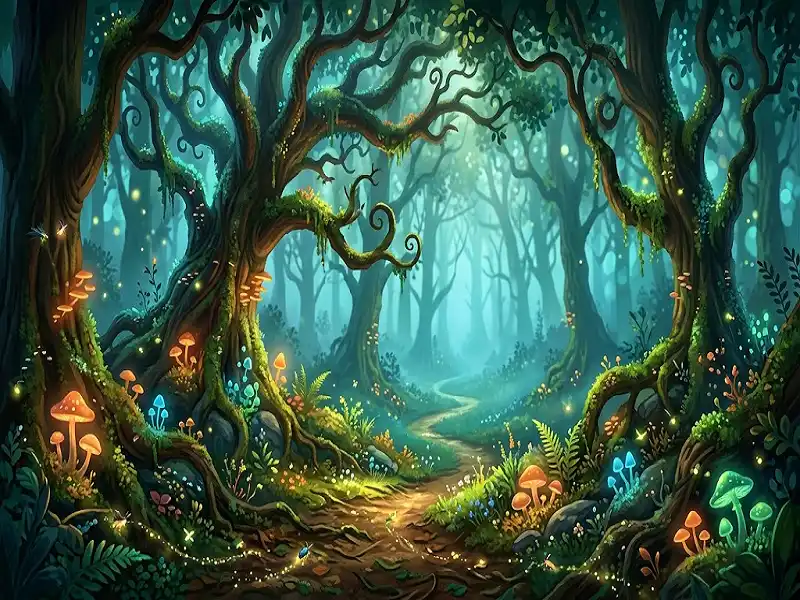
5 Enchanted Forest Scenes
Design Theme – Mystery, discovery, and natural beauty.
Envision tall trees with meandering branches, glowing mushrooms, and a thin trail disappearing among blue-green fog. Movement in the foreground is created by tiny insects. Use lighter, less detailed trees as background. This provides depth, but allows for the main character.
6 Cosy Cottage Interiors
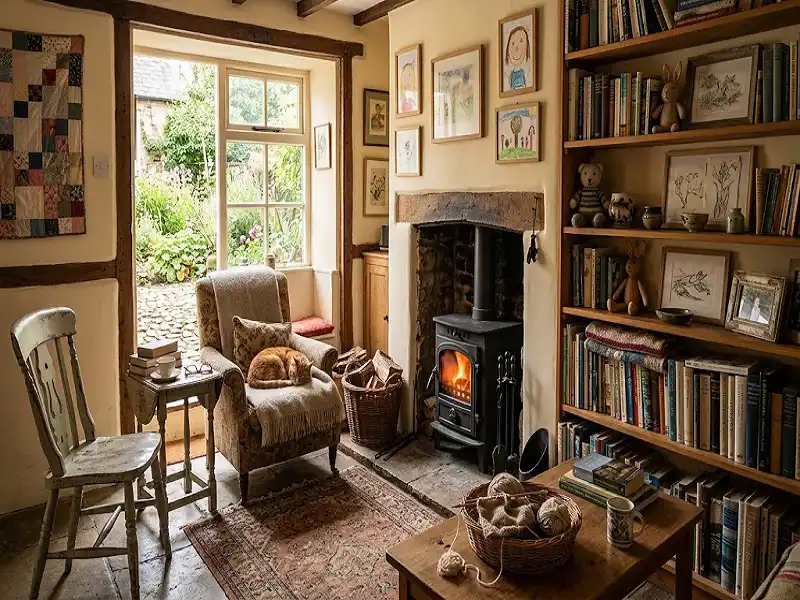
Design theme – Warmth and comfort, family life.
A small cottage could have a wood-fired stove, an assortment of chairs, shelves of books, and a sleeping cat. The windows add a golden light to the interior, which is contrasted by the cooler colors of the exterior. Include personal objects, such as handmade toys or framed drawings. These details lend a sense of liveliness to the home.
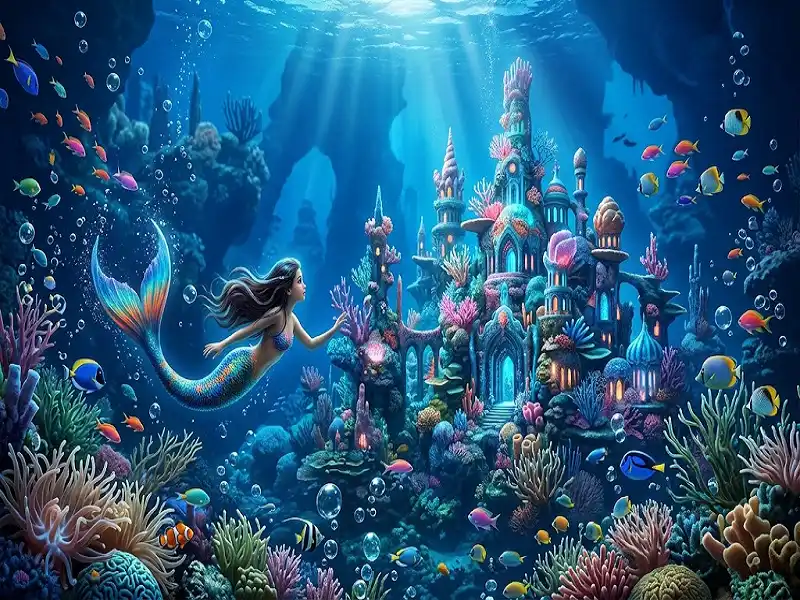
7 Underwater Kingdoms
Design theme – Exploration and Otherworldly beauty.
Imagine a coral palace encircled with colourful fish, sea plants, and floating bubbles. A young mermaid or an inquisitive diver can be featured to lead readers through the scene. Incorporate layered blue tones and different forms to give depth. Focus on the main subject amid the chaotic underwater surroundings.
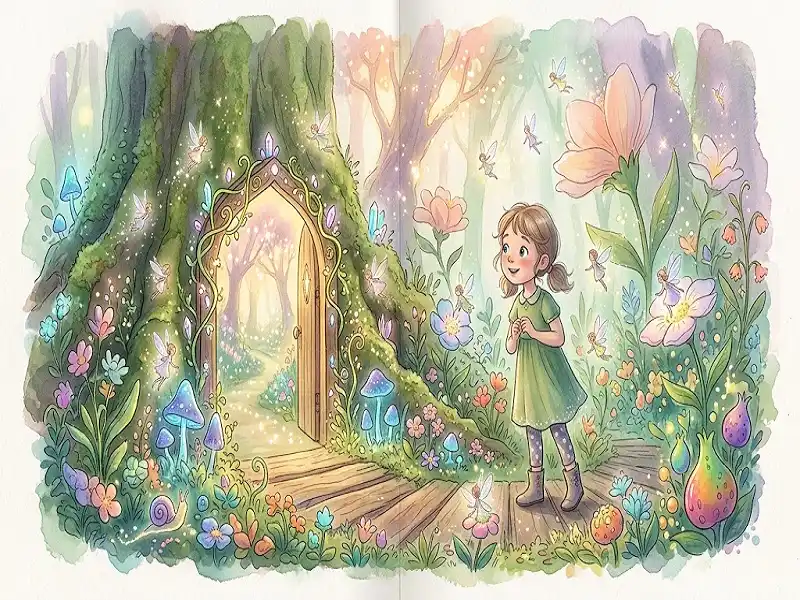
8 Magical Adventure Illustration
Design theme – Fantasy and the imagination of childhood.
A young child is standing in front of a magical doorway with glowing plants, small fairies, and colourful flowers. The lighting is soft, and the colors are dreamy, evoking a sense of wonder. Using imaginative details and gentle colours to grab the attention of young readers, create a scene in which a child enters an enchanted garden.
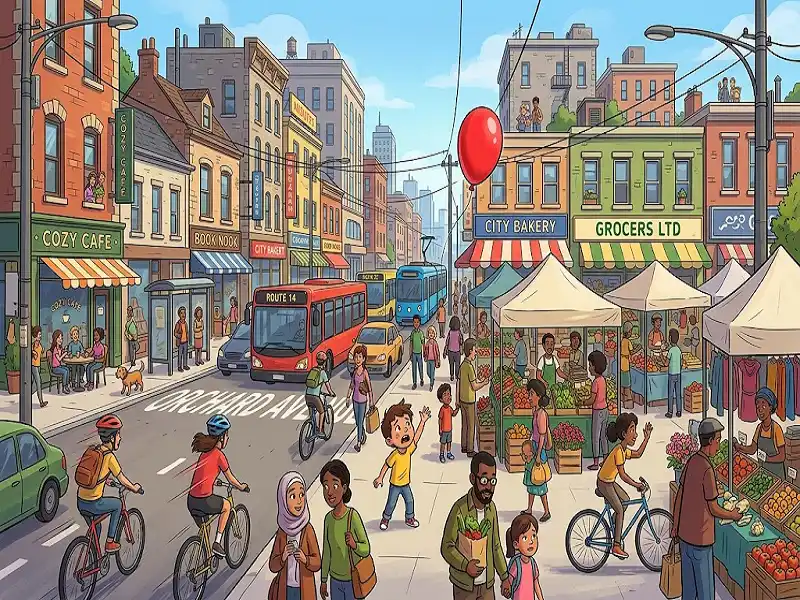
9 Busy City Streets
Design theme – Movement, community, and everyday discovery.
An active street may depict cyclists, market stalls, buses, shopfronts, and individuals with goods. The main action of the scene can be a child looking for their balloon. Use different sizes of buildings and figures. If you have readers who like to look at the detail pages, then you can reward them with small background events.
Which Visual Approaches Are Appropriate for Educational and Imaginative Books?
Certain kids’ stories go better with a direct, teaching style and precise addition of childrens illustration. Others require freedom of visual expression. The following six illustrations show examples of ways that art can convey ideas or enhance a fictional setting.
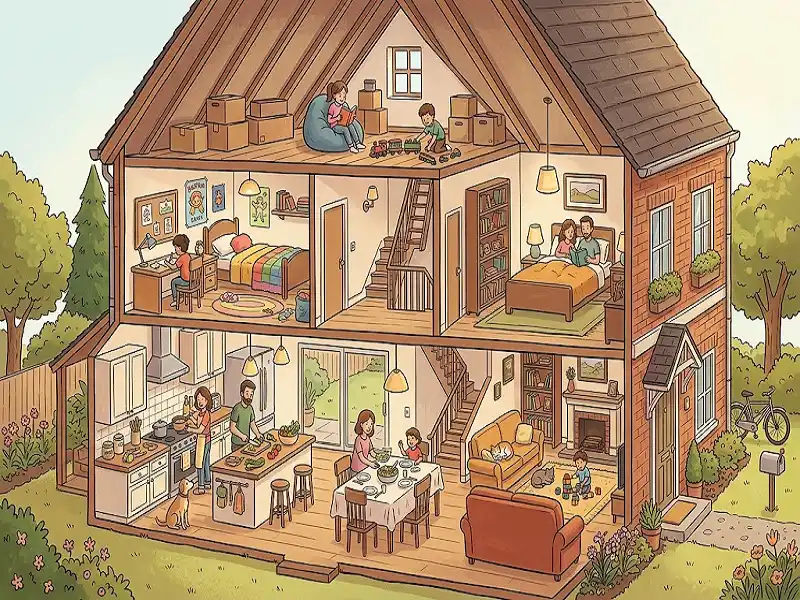
10 Cutaway House Illustrations
Design theme – Discovery via visible space.
Display a house with its roof taken off, showing bedrooms, a kitchen, an attic, and a family cooking dinner. Small activities can be found in each room. Have clean outlines and separation between spaces. This is effective for books that help to explain homes, architecture, or daily routines.
11 Scientific Nature Plates
Design Theme – Observation and accuracy.
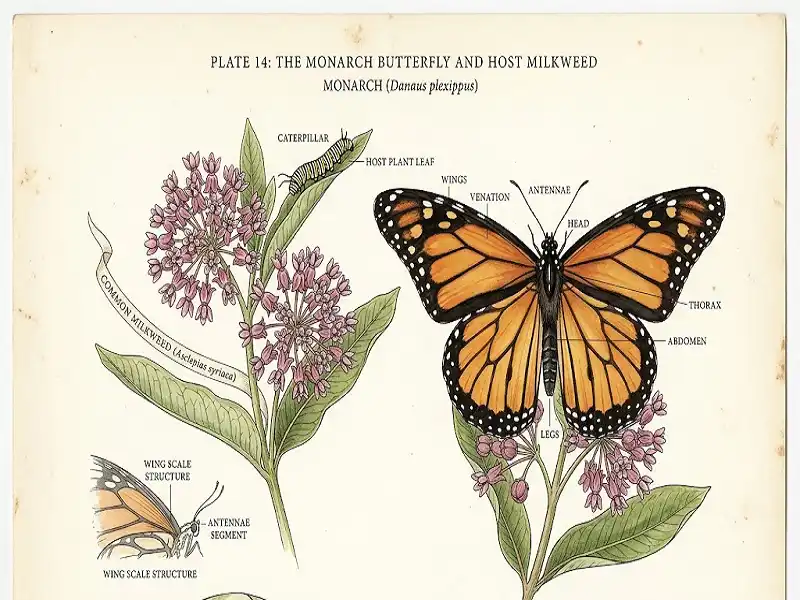
Illustrate a butterfly with carefully shown wings, antennae, and body structure. Display it next to a flowering plant, and insert labels as needed. The background is quite subtle to avoid distractions. Proportions, not decoration, are of high importance.
12 Historical Street Scenes
Design Theme – Time, place, and cultural detail.
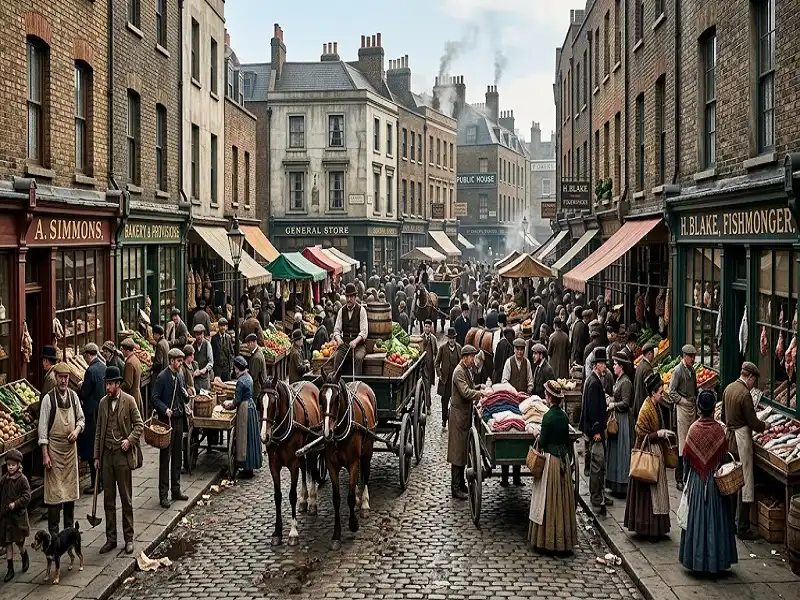
Visualise a market in the 19th century, like horse-drawn carts, shop signs, ancient clothes, and bustling merchants. The building design should be appropriate for the site and time period. Before drawing, research clothing, transport, and buildings. Even minor details can detract from a believable historical setting.
13 Step-by-Step Process Pages
Design theme – Learning through Visual Sequence.
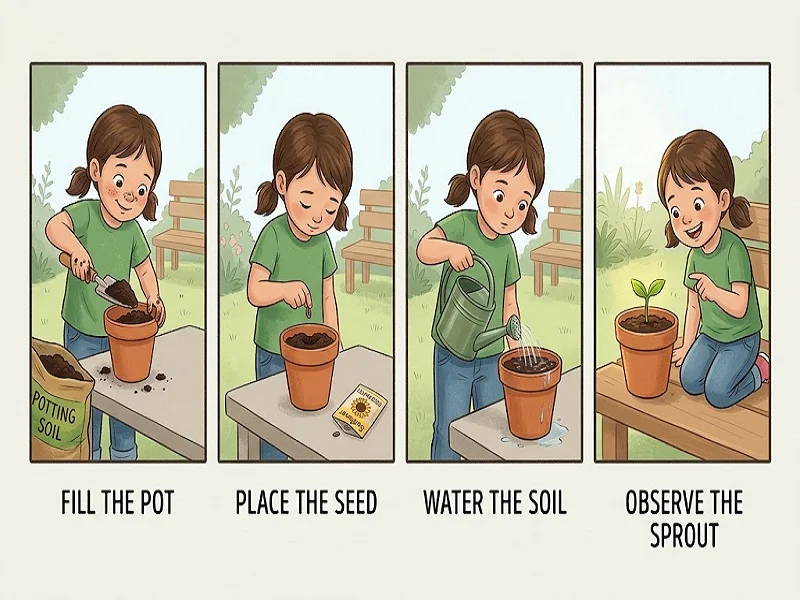
Demonstrate planting a seed in four steps. Filling the pot, putting the seed in the pot, watering the soil, and watching the soil sprout.
Include uniform character positioning and basic backgrounds. The use of repeated visual elements helps readers follow the process.
14 Map-Based Story Scenes
Design theme – Travel, place, and expectation.
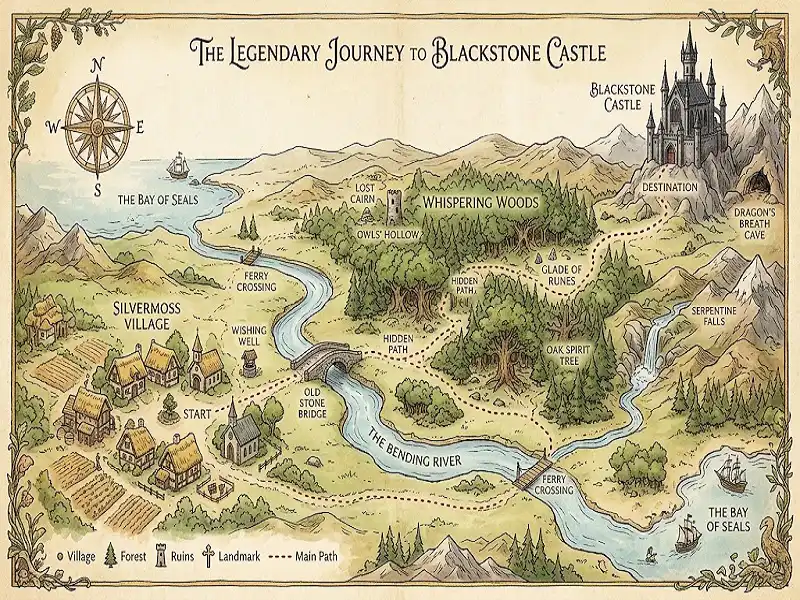
Draw a map of a village, a river, a forest, and a far-away castle. Important story locations can be connected by a dotted route. Include landmarks that will be familiar to readers. When it is directly related to the story, the map is more meaningful.
15 Infographic-Style Explanations
Design theme – Visual structure, clear information.
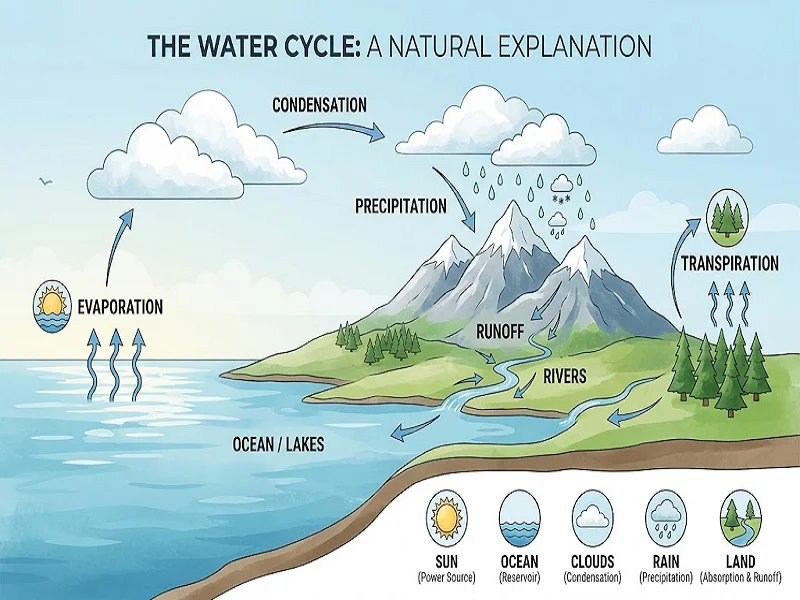
The water cycle could be described in a book with pictures of clouds, rain, and rivers with arrows and simple illustrations of evaporation. Try to keep the number of elements to a manageable size. Standard icons and labels make tricky information understandable.
Which Artistic Treatments Make a Distinctive Reading Experience?
The following eight examples look at some unconventional methods that can impact the design of a publication, the flow of the content, and the image that the design conveys.
16 Make a Collage from Handmade Paper
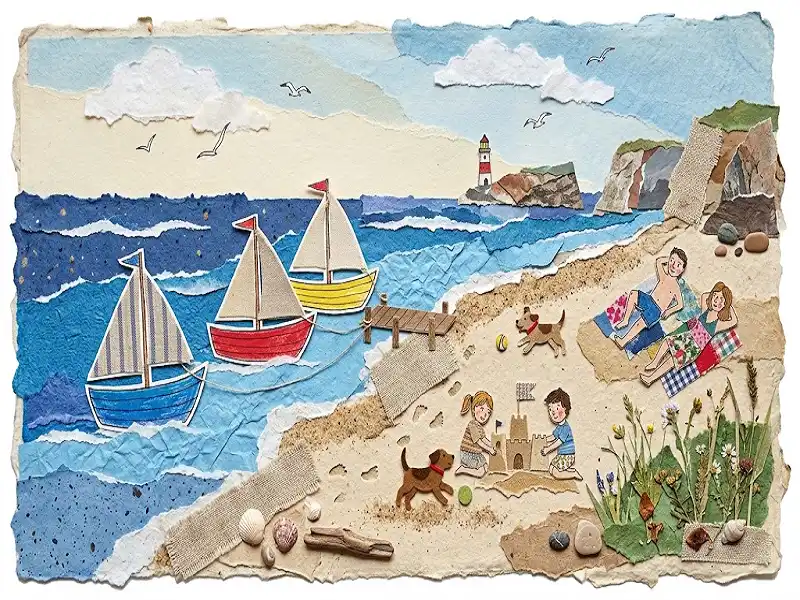
Use torn paper, fabric textures, painted shapes, and cut-out figures to mosaic and create a tactile effect. For a seaside theme, you can have blue paper waves and textured sand, accompanied by hand-drawn boats. This style is appropriate for creative stories, memory, and nature stories.
17 Monochrome Ink Drawings
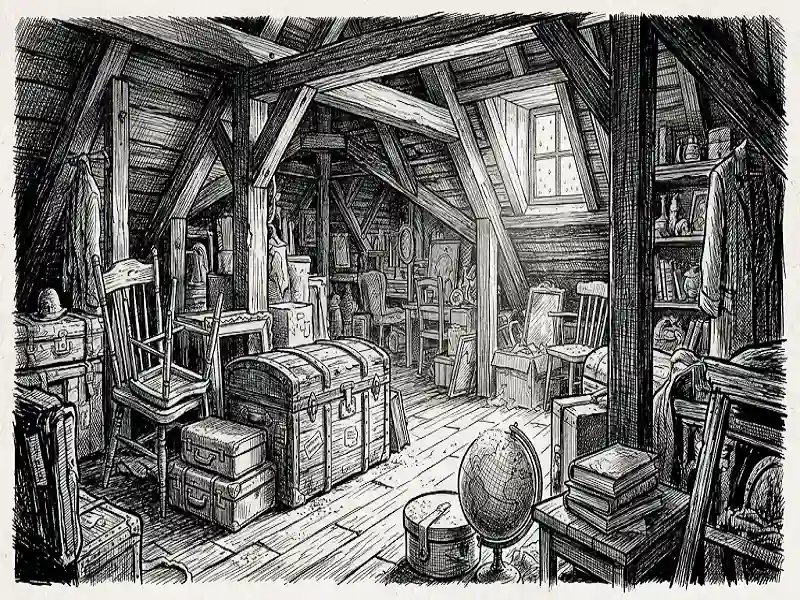
Develop a stylistic approach using black ink, cross-hatching, and white space to create a dramatic language. A mysterious attic that houses old trunks and crooked furniture may look terrific. Use different line weights to create a sense of foreground and background.
18 Watercolour Dreamscapes
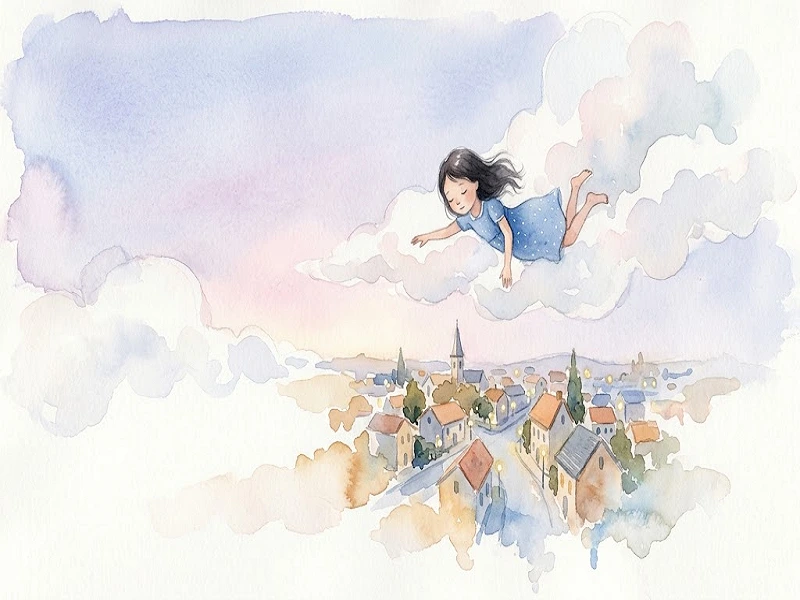
Light wash, semi-opaque shades, and fringed edges may reference dreams or memories. Visualise a kid floating over a serene town and white clouds. Allow some areas to remain unfinished. When the open space is used, the scene might be airy and imaginative.
19 Geometric Folk Art
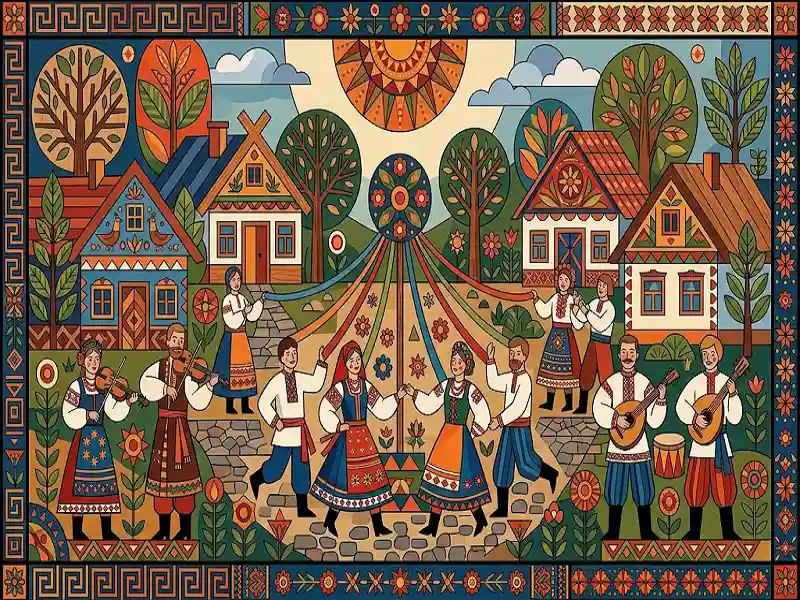
Construct characters or setting using triangles, circles, repetition, and strong decorative borders. Fancy clothes, fanciful trees, and coloured houses could be a part of a village festivity. Thoroughly study appropriate cultural motifs. The design should be based on valid references rather than used for ornamentation.
20 Paper-Cut Shadow Scenes
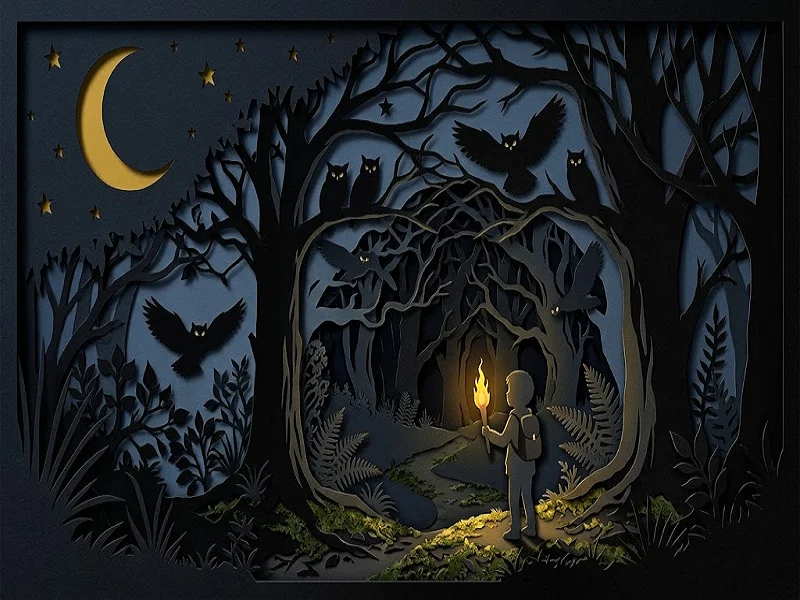
Use flat silhouettes and compelling shapes to create a sense of layered cut paper. Contrast can be created with a forest scene, children holding torches, owls, and the moon. Use overlapping forms to create depth and avoid detailed shading.
21 Retro Poster-Inspired Artwork
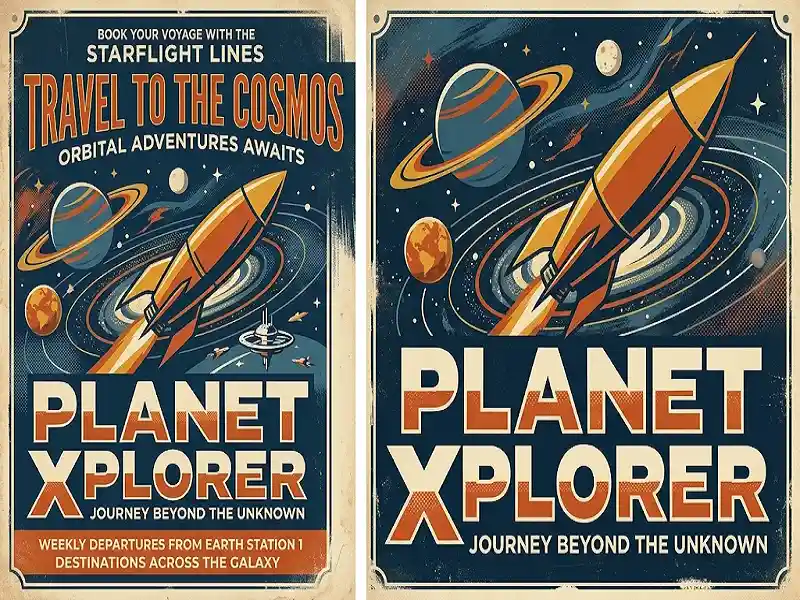
Use a limited palette of colours, prominent typography, and simplified illustrations. One of these might be a fictional space adventure, a rocket, planets, and a great title like an old travel poster. Content text should be legible, and lettering should not be copied from an existing poster’s design.
22 Sequential Comic Panels
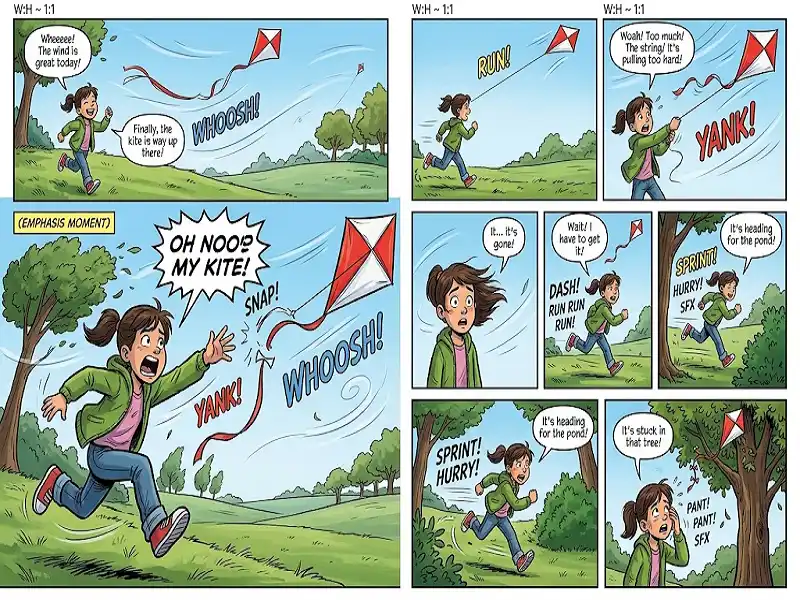
Divide a page into panels that show action, dialogue, and reactions. A character pursuing a flying kite can jump around to several frames. Change panel size to regulate pacing. Bigger panels can highlight key moments, and smaller ones can depict fast actions.
23 Interactive Lift-the-Flap Scenes
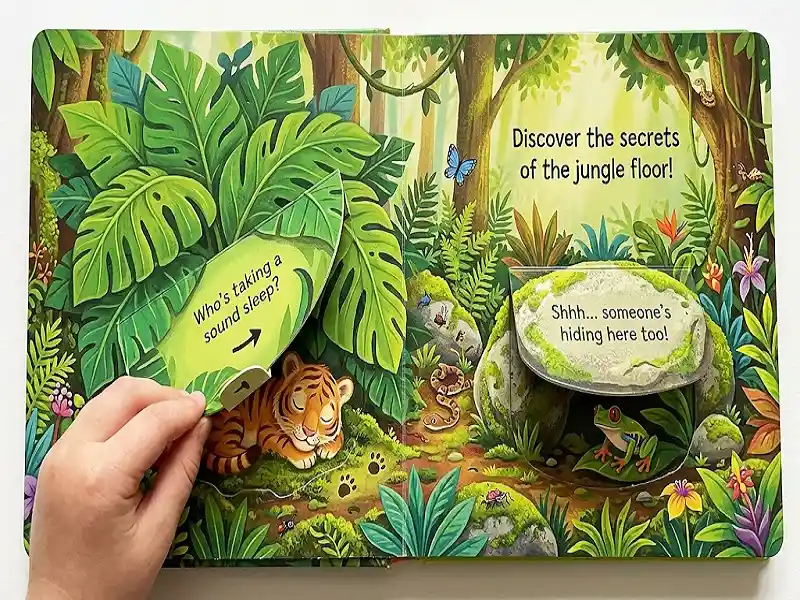
Design pages with under-flaps of hidden characters, objects, or details. A jungle picture could show a sleeping tiger behind a tree, or a small frog under a rock. Make the hidden elements relevant to the story. Interactive features are used to encourage discovery, but should not spoil the reading experience.
Illustrated Book Cover Designs By BookIllustration.co.uk
A book is judged by its cover, and it is not just said metaphorically. Readers do pick random books based on the design on their cover, and that is why they hold the same significant value. A famous and reputable illustration house called bookillustration.co.uk has a professional and expert team of illustrators who give visual existence to ideas seamlessly.
24 Vintage Comic-Book Action
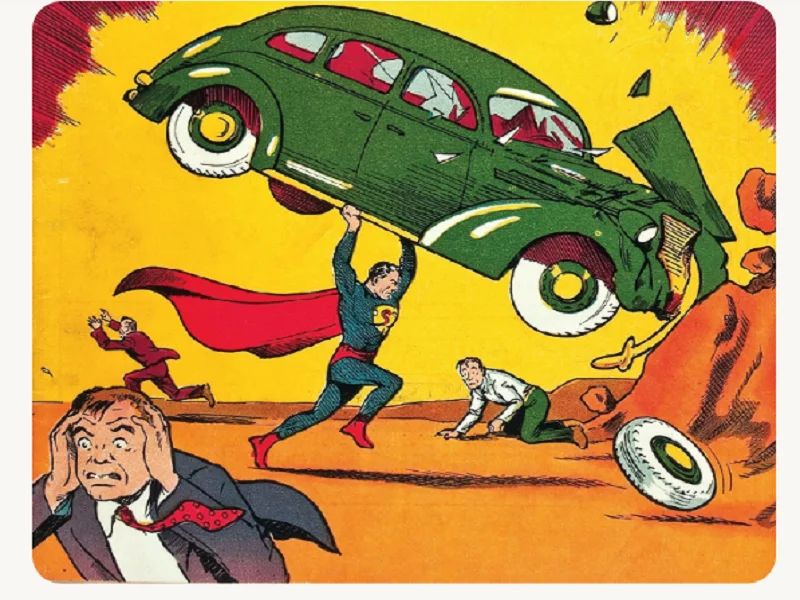
Design concept – Adventure & Retro Superhero Narrative
The caped superhero is holding a flying green car, while other characters are in awe and astonished. Bright colours, bold outlines, and exaggerated movements create an energetic comic-book style. Here, the illustrator uses dramatic action and old-fashioned colours to design a superhero who comes to save people from an out-of-control car.
25 Playful Animal Storybook
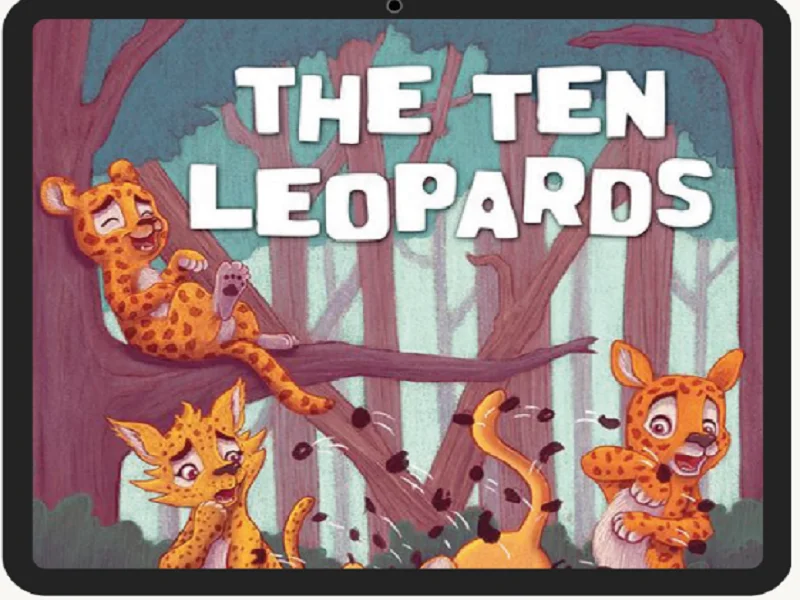
Design – Whimsical children’s illustration with a jungle setting design theme.
The book cover showcases a forest scene with colorful and dynamic leopards playing in it. Fun, eye-catching storybook cover with purple trees, orange characters, and large white letters. The artist uses expressive faces and contrasting colours to create a cover of young leopards exploring a forest.
Reference Idea
A cover using expressive faces and contrasting colours depicting young leopards exploring a forest.
FAQs
How does an illustration differ from a drawing?
Mark-making is a drawing, and artwork that communicates or supports an idea, story, or message is an illustration.
What is the right number of illustrations for a picture book?
No count can be determined. The number of pages depends on the manuscript, the number of pages, the pacing, and the reading experience.
Is it better to add illustrations before or after the writing?
Both types of approach will work. Some creators start with a word and then try to create a visual idea. Others start with a visual idea and then try to form a word.
What type of file format should illustrators present?
Typical common professional formats are high-resolution TIFF, PNG, and PDF. When working with artwork that needs scalable graphics, vector formats might be useful.
How can authors find a suitable illustrator?
Check portfolios, see if there is any experience with your genre, discuss the needs for your project, and have a specific contract established concerning revisions and rights.
Some Final Determinations
The right visual direction can lend a book its own personality. Whether it is expressive characters or environments populated in great detail, educational diagrams or experimental textures, illustrations can perform well when combined with the right words. These references are available for use as starting points to investigate the elements of colour, composition, atmosphere and storytelling. You don’t need to copy a style you like, but simply need to find out what makes it successful. Mix those attributes with the requirements of your story, and create a visual plan that is meaningful, cohesive and memorable.

I am Alex Morgan, a passionate graphic illustrator and creative storyteller who blends visual art with insightful blogging. Through detailed illustrations, design inspiration, and creative industry tips, I help readers explore the world of digital creativity. My blog covers art trends, branding ideas, and practical guidance for aspiring designers and visual content creators.